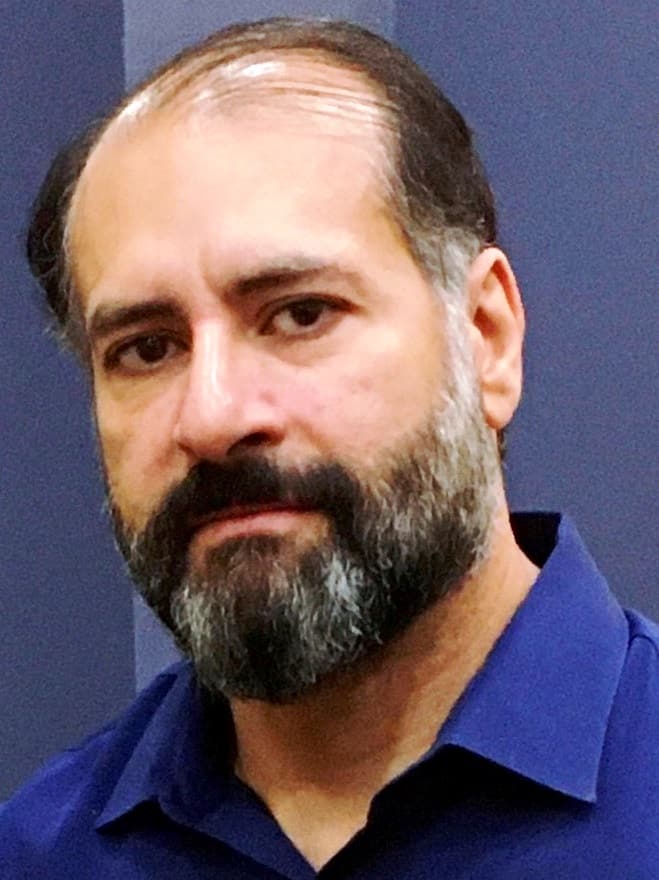
Raymond Ibrahim
Raymond Ibrahim is an American author, historian, and translator specializing in Arabic history and the interaction between Islam and the West. Born to Coptic Christian immigrants from Egypt, he is fluent in both Arabic and English, which has allowed him to translate primary sources such as The Al Qaeda Reader. Ibrahim has held positions at the Library of Congress and the Middle East Forum and is currently a fellow at the Gatestone Institute. His most notable works, including Sword and Scimitar and Cruified Again, chronicle fourteen centuries of military conflict and the contemporary persecution of Christian minorities in the Middle East. He frames the historical relationship between the Islamic world and the West as one of "unwavering continuity" and perpetual warfare.
What critics say
What critics have to say
Critics, particularly academic historians and Middle Eastern studies scholars, argue that Ibrahim’s work is "polemical" rather than objective history. They accuse him of "essentializing" Islam as a monolithic, inherently violent faith while "cherry-picking" historical events to fit a "clash of civilizations" narrative. Reviewers have noted that he often ignores the complex geopolitical and social factors behind conflicts, opting instead for a "selective reading" of religious texts to explain Muslim behavior. Some critics also challenge his historical assertions regarding the life of Muhammad, labeling his methodology as substandard compared to contemporary academic rigor.
Why we follow
him
Why we follow him
Supporters admire Ibrahim for being a "truth-teller" who provides a "dire wake-up call" to the West regarding the history of Islamic expansionism. His followers value his ability to translate and analyze original Arabic documents that they believe are often ignored or "whitewashed" by mainstream academia. He is seen as a vital advocate for oppressed Coptic and Eastern Christians, giving a voice to those he describes as "third-class subjects" in Islamic states. For his audience, Ibrahim’s work offers a clear, historical lens through which to understand modern global conflicts and the preservation of Judeo-Christian heritage.