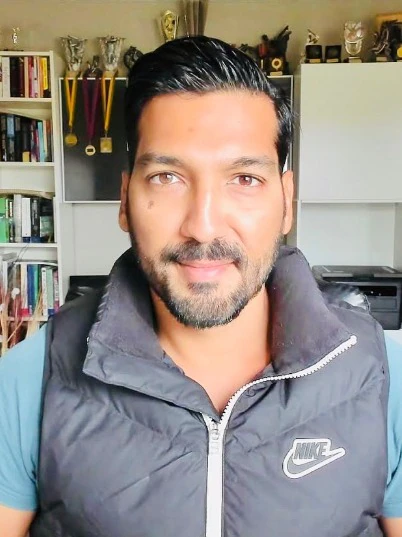
Harris Sultan
Harris Sultan is an Australian-Pakistani author, activist, and prominent secular commentator known for his critique of religious orthodoxy. Born in Lahore, Pakistan, he moved to Australia in his late teens, where he transitioned from a devout upbringing to outspoken atheism.
He gained significant international attention with the publication of his book, "The Curse of God: Why I Left Islam," which outlines his philosophical journey and arguments for rationalism. Sultan is a regular presence in the "Ex-Muslim" digital space, utilizing YouTube and social media to advocate for:
- Free speech and the right to dissent.
- Secularism within South Asian communities.
- Human rights and scientific literacy.
While his views are often polarizing, he remains a central figure in contemporary debates regarding faith, identity, and the integration of Western and Eastern values.
What critics say
Critics of Harris Sultan often describe him as a polemicist rather than a scholar. Their primary arguments include:
- Lack of Nuance: Critics argue he presents a "reductionist" view of Islam, ignoring centuries of diverse philosophical interpretation to focus solely on literalist or extremist perspectives.
- Aggressive Tone: He is frequently accused of being unnecessarily confrontational, which some argue alienates moderate audiences and hinders constructive dialogue.
- Political Framing: Opponents claim his appearances on right-leaning platforms allow his message to be used for anti-Muslim bias or "Western chauvinism."
- Theological Errors: Religious scholars often cite inaccuracies in his scriptural analysis, claiming he lacks the linguistic and historical expertise required for rigorous critique.
Why we follow
him
Harris Sultan’s followers generally value him for his unapologetic boldness and his role as a pioneer for the "Ex-Muslim" community. They admire:
- Courage: In a culture where apostasy and blasphemy can carry severe social or legal consequences, his openness is seen as heroic.
- Plain-speaking: Fans appreciate his "no-nonsense" approach, which strips away complex theological jargon to address what he views as fundamental moral and scientific flaws in scripture.
- Representation: For many South Asian atheists, he provides a rare, visible identity, validating their private doubts and offering a sense of community.