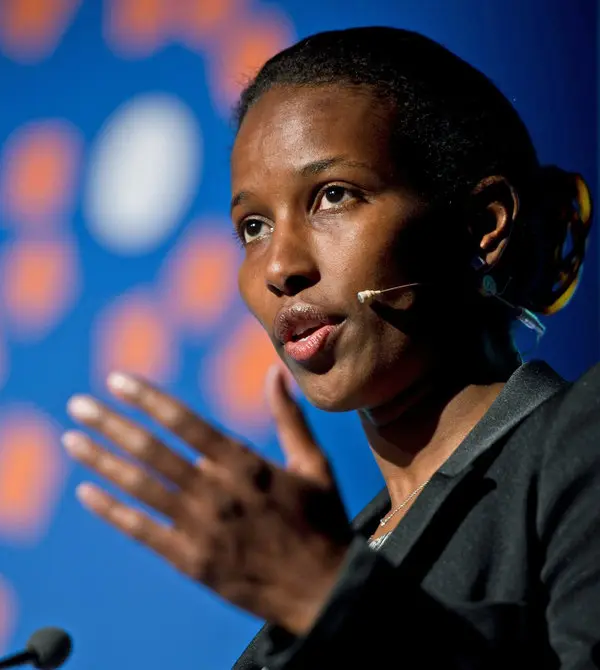
Ayaan Hirsi Ali
Ayaan Hirsi Ali is a Somali-born Dutch-American writer, activist, and former politician. After fleeing an arranged marriage and seeking asylum in the Netherlands, she served as a member of the Dutch House of Representatives. She rose to global prominence following the 2004 assassination of filmmaker Theo van Gogh, with whom she collaborated on the film Submission, a critique of the treatment of women in Islam. Since moving to the United States, she has worked with the American Enterprise Institute and the Hoover Institution. For years, she was a leading figure in the "New Atheism" movement, but in late 2023, she made international headlines by announcing her conversion to Christianity, citing the need for a "civilizational" foundation to oppose authoritarianism and "woke" ideology.
What critics say
Critics accuse Hirsi Ali of "native informancy," claiming she leverages her background to validate Western prejudices. Many argue her critiques are overly broad, failing to distinguish between extremist theology and the lived experiences of billions of Muslims. Some secularist former allies were disillusioned by her conversion to Christianity, labeling it a "political convenience" rather than a spiritual shift. Additionally, she has faced criticism for past statements regarding the "crushing" of Islam, which opponents describe as an incitement to conflict rather than a call for reform.
Why we follow
her
Followers see Hirsi Ali as a "living testament" to the struggle for women’s rights and intellectual freedom. She is admired for her immense physical and moral courage in the face of constant death threats. Supporters view her as a sophisticated intellectual who bridges the gap between grassroots activism and high-level policy. Her recent shift toward Christianity resonated with those who believe the West must reclaim its religious roots to survive, while her long-standing defense of Enlightenment values makes her a hero to free-speech advocates worldwide.